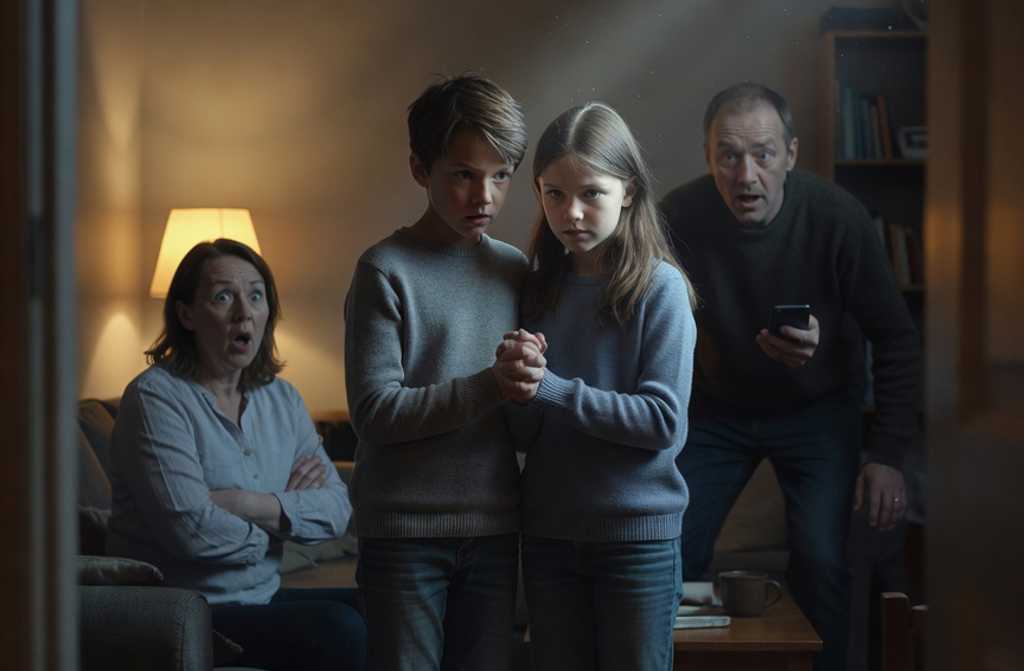
Many years later, as I look back on those distant days in a quiet neighborhood of Gothenburg, the memory still lingers of how a woman’s voice rang out through the stairwell of our apartment building: “What is wrong with you this time around?! How much longer can this go on?! I am completely fed up with it all!” The heated words from behind one of the doors carried clearly across the entire entrance hall.
At that moment Astrid and Oskar were making their way up the stairs. They halted abruptly, as though struck by something unseen. Their eyes met briefly, and in that fleeting glance no words were required. Both grasped the situation without a sound: it was wiser to turn away now. Exhaling together, they pivoted and slipped quietly out of the building. Returning to the apartment that evening was clearly not in their plans.
Who would choose to spend the evening listening to unending parental quarrels? Certainly not them. The pair strode purposefully toward the neighboring entrance where their farmor Ingrid lived. Her place had become their true haven in those days. What had once been weekend visits now turned into nightly refuge for nearly every evening.
The air in the family home had grown impossible to bear. The parents, lost in their own world, shouted at one another without pause. Worse still, they pulled the children into the fray more and more often. The mother might whirl toward her daughter and demand, “Tell me, am I not right? You agree with me, do you not?” Or the father would address his son without waiting: “No, I am correct here! Back me up!”
Astrid and Oskar stayed silent. They had no wish to pick sides or join the endless clash. All they sought was quiet, peace, and warmth, the very things they found with their grandmother.
These outbursts repeated daily like an old tune no one could bring themselves to stop. The children had grown skilled at reading the faint warnings that trouble was brewing. A certain sharpness in tone, a sudden jerk of movement, a quick look between the parents, all served as cues to slip away. What child would wish to live under such strain, where any talk could flare into a loud row at any second?
The siblings could not fathom what had sparked this breakdown. Their family had never been flawless like something from an advertisement, yet earlier the parents had known how to reach agreements. Disputes arose now and then, as they do everywhere, but they ended in measured talks rather than raised voices. The mother might look displeased, the father might speak a little louder, but within half an hour matters were settled. Everyone would sit at the table once more, share coffee and cinnamon rolls, and plan the weekend ahead.
Roughly two years earlier everything shifted. It felt as if someone had quietly swapped the former parents for new ones who now quarreled over the smallest matters. A dirty mug left on the table? Fuel for a long lecture on thoughtlessness and lack of respect. A shirt hung on the wrong peg? Cause for cutting remarks about household order. A spoon left in the sink? Almost a serious offense worthy of drawn-out discussion.
One evening Astrid sat in farmor Ingrid’s kitchen, stirring her coffee without much thought. She watched the swirls in the cup for a long while before asking with quiet bitterness, “How can things be this way, farmor? Everything changed after their trip together. What took place there?”
Farmor Ingrid paused, set her cup down, and gently touched Astrid’s hand. She herself only suspected the roots of the discord, and those suspicions brought her no comfort.
“Adults will work it out,” she answered softly, keeping her voice steady. “Sometimes people need time to see the right path forward.”
Astrid nodded, yet doubt showed in her eyes. She sensed her grandmother held something back but chose not to press. What good would it do? While treated as children, serious matters would stay hidden.
“We cannot endure these shouts any longer!” Oskar burst out in despair. “We cannot finish lessons or read a book in peace! I no longer recall when we last sat together at the table as a family. If being together is so hard for them, let them separate and spare us all the trouble!”
The words spilled out, yet they held the truth of recent months. Oskar spoke for both, knowing his sister shared the feeling. Their home had known no calm for ages: the mother might speak sharply, the father might reply with irritation, and another row would begin with no place to hide.
“Oskar…” farmor Ingrid looked taken aback. She laid aside her knitting, studied her grandson, and slowly shook her head. “Have you considered what follows if they separate? You two would be split apart. Are you prepared to live apart from Astrid?”
“We will stay with you!” Astrid said at once, her eyes pleading. “We are here nearly all the time already! You would not mind, would you?”
Farmor Ingrid grew still. She understood the weight on her grandchildren, how worn they were from the constant clashes. On one side, the children would be safe in this steady setting, able to study without noise, read in quiet, and feel secure. She loved them deeply and stood ready to give them every care.
On the other side lay the question of their parents. How to explain that the children no longer wished to live at home? Would the parents accept it? If so, how might it shape their bonds with the children? Could this step lead to a lasting break?
“Let us take no hasty action,” the woman said after a deep breath. “You know I welcome you here always. Yet first let us speak with your mother and father. Perhaps together we can mend matters.”
“Do not worry, we will handle the talk ourselves,” Astrid stated with confidence, smiling. The grandmother had nearly given in, and that mattered most. “Only do not turn us away, please! We truly cannot remain there! It would suit them better apart, or one day they might truly harm one another! Yesterday I saw father raise his hand toward mother… He did not strike, truly! But he came close.”
Astrid fell quiet, recalling the awful instant. She had entered the kitchen for water and stood frozen: her father half turned toward her mother, his arm lifted sharply while her mother ducked by instinct. A moment later the arm dropped, yet that moment stretched endlessly for Astrid.
“Farmor, say yes!” Oskar urged, moving closer and taking his grandmother’s hand as if fearing refusal. “We will help with every household task. Only do not send us back. They pay us no heed at all! Yesterday I told father about the parent-teacher meeting. Do you know his reply? ‘Ask your mother!’ So I did. Can you guess her answer?”
“Ask your father?” farmor Ingrid asked softly, already knowing.
“Precisely!” Oskar gave a bitter laugh. “Then they argued for two more hours over who should attend. They sat in separate rooms shouting down the hall while I simply stood listening.”
“I asked them to sign the form for the museum trip,” Astrid added, eyes down, fingers twisting her sleeve. “Now I am the only one in class who will miss it. Neither signed. Instead they quarreled afresh, mother insisting it was father’s duty while he claimed she should manage school affairs.”
Farmor Ingrid saw the deep weariness in her grandchildren. It was no ordinary tiredness but the kind built over months of days that blurred together, where family warmth gave way to constant rows and support yielded to indifference.
“It is ever the same,” Oskar sighed, shoulders drooping. His voice carried fatigue as though the words had been spoken countless times. “Any request from us becomes fresh cause for dispute. We do not even wish to return home. A few evenings past we arrived at eleven and they said nothing. They sent us straight to bed without asking where we had been. Later they spent hours blaming one another for poor upbringing.”
The pair sighed together once more. In recent months they had weighed whether divorce offered the sole escape. Yet the thought of separation terrified them, for one would go with the mother and one with the father, turning daily closeness into occasional weekend visits.
They weighed choices in whispers at night when alone in their room. Once Oskar joked about running away, simply packing bags and heading wherever chance led. He said it lightly to ease the mood, but Astrid took it in earnest. Her eyes brightened briefly before she whispered, “What if we truly left, even for a couple of days?” In that instant both understood the home had grown so strained that flight no longer seemed impossible.
Then the idea struck: the grandmother! Why not move in with her? The notion came to both together. Astrid voiced it first: “Let us ask farmor if we may live with her? She will never shout or argue, and we will escape these endless rows.” Oskar added at once, “Yes! She is kind and always stands by us. Her apartment is large enough for us all.”
They pictured the new days ahead: quiet mornings, space to study without noise, evenings with board games beside their grandmother. No shouting, no blame, no need to retreat to their room to avoid the storm. Hope stirred in their hearts after so long. Let the parents settle their own affairs; the children would at last find rest, or so Astrid and Oskar imagined while dreaming of life with farmor.
“Mother, father, we must speak seriously,” the twins said with resolve, facing their parents in the living room one evening when both were home. Astrid gripped Oskar’s hand for steadiness. “First promise to hear us fully before giving your views.”
Lars set aside his phone and glanced up in surprise. Eva, sorting items on the sofa, straightened at once, her face showing she found the request unthinkable.
“This is the result of your way of raising them!” she snapped, folding her arms. “The children now dictate terms to us, as though we must answer to them!”
“Who are you to speak!” Lars shot back at once, setting the phone down. “I am always working to support this family while you stay with them. What have you taught them that they now issue orders?”
The twins glanced at one another. They had expected the talk to slide into the usual exchange of blame, yet they could not back down.
“Stop!” Astrid cried, her voice near tears. She stepped forward, striving for clear, steady words though she trembled inside. “Oskar and I have decided you should divorce.”
Silence filled the room. Eva stood with her mouth open while Lars rose slowly from the sofa.
“Such news!” the mother’s voice turned sharp. “Astrid, you are far too young to advise adults on how to live! What else have you settled? Will you divide the flat for us as well?”
“If you refuse to separate we will contact the social services,” Oskar said, tightening his hold on his sister’s hand for strength. His tone was firm though doubt lingered within. “Then, father, you could lose your position. Your firm dislikes public scandals, as you have said yourself. Reputation matters above all.”
“And you, mother,” Astrid went on, meeting her mother’s eyes, “will lose the respect of the neighbors. They will stop speaking to you. Everyone already hears your rows, and we can supply more details.”
“They threaten us! Look at them!” Eva burst out, turning from one child to the other. “These are our own children! How dare you treat us so?”
“We do not threaten,” Oskar replied quietly yet steadily. “We only wish you to see that this cannot continue. We are worn out by the shouting, by your failure to listen, by every small request becoming a battle.”
“You will divorce and live apart while we stay with farmor,” the twins finished together as they had practiced. “It will suit everyone: calm for us, fewer clashes for you. We refuse to stand between you any longer.”
The parents remained still. For once they found no reply. Normally such talks led straight to arguments and finger-pointing, yet now both seemed unable to speak.
Their thirteen-year-old children acted in ways never seen before. Astrid and Oskar stood hand in hand, gazing at their parents with steady eyes free of usual shyness. They spoke of matters the adults themselves avoided.
Lars and Eva had considered divorce before. The same obstacle always arose: with whom would the children live? Splitting the twins felt unthinkable; they had always been close, doing everything side by side and supporting one another. The parents could not picture one living apart from the other, meeting only on weekends.
The thought of farmor had never crossed their minds until now. Both had been too caught in their own hurts and complaints. Hearing the children’s suggestion, however, made them wonder if this might be the answer. Farmor loved the grandchildren, her flat was roomy, and she welcomed them gladly. Perhaps this could ease at least some of the strain.
“I will ring mother,” Lars said at last through clenched teeth, his voice thick. “If she agrees…”
He did not finish. Eva cut in, her voice carrying a weariness that startled even her:
“Then we can finally cease tormenting one another. Call her. I will be glad not to see your face each day.”
Her words hung between them. She had not meant to sound so blunt, yet years of stored pain let the words escape.
“And how glad I will be!” Lars answered, masking his hurt with a wry tone.
No anger colored his voice, only a sad smile at what their life together had become. He took out his phone and dialed slowly. As the rings sounded, both looked away, avoiding each other’s gaze. They did not yet know where the call would lead, but they sensed a line had likely been crossed.
That day the Nilsson family reached a turning point. It began with a long talk between Lars and his mother. Farmor Ingrid listened without interruption, asking only occasional questions for clarity.
When Lars finished, a pause followed. Farmor Ingrid drew a deep breath and said, “If you both believe this serves the children best, I consent. They will be safe here, and I will look after them.”
By evening the parents met in the kitchen for the first time in ages without raised voices or blame. They sat facing one another and discussed the details. Step by step they reached the same view: divorce offered the only sensible path. The children would move to farmor, and the parents would send monthly support for their care.
Neither meant to abandon the children. Both pledged to visit on weekends, yet on separate days to limit contact between themselves.
“I will come Saturday mornings to take them out, and you can come Sunday,” Lars said wearily, and Eva nodded. “This keeps things simpler. Above all the children must not feel cast aside.”
Their aim was to reduce contact and prevent fresh disputes. They agreed never to speak ill of one another before the children, never to draw them into sides, and never to argue in their presence.
“We remain their parents,” Lars said. “We must continue as such even if we are no longer married.”
Time proved the choice wise. The children at last relaxed and lived as ordinary teenagers. Astrid joined an art group she had long wished to try but had lacked the peace for earlier. Oskar took up football and made new friends on the team. They spent time together once more, walking the city, visiting cinemas, and talking of school without fear of sudden rows.
Steady calm returned to their studies as well. They now had a quiet space for work, free from shouts and clashes. Homework was completed without tension, and grades improved at once. Teachers remarked on the change: “You have grown so focused, both of you. Well done!”
Life settled into a new, steady rhythm, far from perfect yet peaceful and predictable. The children no longer hid away or started at loud voices or fretted over every move. They simply lived as teenagers should when they find support amid hardship.
Five years on, the Nilsson household moved at a measured pace. Astrid and Oskar had grown used to the pattern of studies, clubs, friends, and quiet evenings with farmor. The parents still visited in turns, each on their chosen day, bringing gifts and attention yet without old complaints. Over time they had learned to speak with restraint and courtesy, free of earlier anger.
The first direct meeting between the former spouses came at the twins’ graduation. The school held a formal evening, and both parents attended. They kept apart at first, taking seats on opposite sides of the hall, yet the distance eased as the night went on.
When dancing began, Lars approached Eva: “Shall we dance and recall old times?”
She paused, then nodded.
Afterward they sat long in the schoolyard watching graduates enjoy themselves by the fountain. Talk arose naturally, first about the children, then about earlier days.
They spoke at length that night, remembering joyful parts of their marriage and acting with dignity. They focused not on past hurts but on the good that had once bound them. Watching from a distance, Astrid and Oskar felt relief, though it still pained them to see two beloved people treat each other almost as strangers.
Then came an unexpected turn. The next day Lars and Eva invited the children to a café. Over tea they clasped hands, and Lars announced with a broad smile, “Children, your mother and I have decided to marry again. These years have shown our feelings remain. We still care for one another and wish to form a family once more.”
His voice rang with joy, as though sharing the finest news. Eva smiled brightly, awaiting delight.
The twins looked at one another, their faces clouding. Doubt crossed Astrid’s eyes while Oskar clenched his fists beneath the table. The same errors again! What could their parents be thinking? Could they share a home without fresh clashes?
“You cannot mean it,” Astrid managed.
“We do,” Lars replied with certainty. “We have both changed. We have learned to listen, and we want to give our family another chance.”
The children stayed silent. Conflicting feelings stirred within: hope that real change had occurred, yet fear of repeating old pain.
Astrid and Oskar offered no argument. They made no comment at all, which wounded their parents deeply. Eva glanced at them in confusion: “Are you not pleased? We thought this would make you happy.”
The twins merely exchanged looks and lifted their shoulders. What could they say? “Do not do this! Do not spoil your lives”? The words would not come. They wished neither to seem cold nor to pretend all was well.
The rest of the visit passed awkwardly. The parents spoke of plans while the children nodded politely, their thoughts elsewhere. On the way home Astrid murmured to her brother, “I hope they understand what they are doing.”
Oskar only sighed.
“So we head to Stockholm?” Astrid opened her laptop to check university pages. “Far from this chaos. I can already picture how this spectacle will finish!”
“We do,” Oskar answered firmly, weariness beyond his years in his tone. He ran a hand through his hair as though shedding the weight of recent months. “They may manage a month or two in peace. Then it begins again: shouts, slamming doors, accusations. I refuse to remain hostage to their bond. I will not wake each morning wondering their mood and whose turn it is for the next wave of blame.”
He rose and paced, gathering scattered books by habit. One question circled in his mind: why did adults, meant to show wisdom and steadiness, act like restless youths? Why repeat the same mistakes instead of solving problems?
“We must leave,” he said again, pausing at the window. Twilight settled outside, tinting the city in soft orange. Oskar gazed outward as if seeking his future. “Far enough that their rows cannot reach us. Let them handle their own affairs. We are no longer their counselors, go-betweens, or targets. We have our own lives and dreams, and I will not let another round of parental folly destroy them.”
“When do we send the applications?” Astrid asked calmly.
“Tomorrow,” Oskar replied without pause. “To make certain we do not waver.”
She nodded in silence, eyes on the screen. Pages from Stockholm universities appeared: study programs, dormitory details, job prospects after graduation. Lists filled her notebook beside the laptop: advantages and drawbacks of each choice, required papers, deadlines, admissions contacts.
“The key is to study without their disputes pulling us in,” she said softly. “It will be good to be so distant.”
“Precisely,” Oskar agreed, settling beside her and leaning in to read. “When they next argue over blame we will hear nothing. Let them call and complain or summon us for family talks; we take no part. Their wish to try again belongs to them, not us.”
Eva and Lars did remarry. This time they chose a simple ceremony at the city hall followed by a small dinner with close family and friends. They avoided any grand display, wishing neither extra cost nor attention.
In the photographs they appeared genuinely content, smiling and holding hands with tender looks. Their linked fingers and warm glances filled the frames. It seemed old hurts had faded, the separation years had helped, and a bright path lay ahead. The children studying the images wondered if matters might truly differ this time.
Yet they did not. The first weeks after the wedding passed calmly. The couple tried to show more care, offered thanks often, and overlooked small faults. Old patterns soon returned, however. Within a month raised voices echoed again. At first came quiet, pointed remarks: “You left your things out once more?” “Why did you not say you would be late?” “You might have helped since you were home.”
Open clashes followed. Quarrels sprang from trifles: wet towels in the bathroom, forgotten bread, a television left too loud. Words grew sharper, voices louder, and the gaps between rows shrank.
Two months later, as Oskar had foreseen, matters reached a breaking point. One evening a dispute over groceries turned fierce. Lars hurled a cup at the wall in rage; it shattered loudly, scattering pieces. Eva seized a plate and dashed it to the floor. The crash of breaking crockery rang through the rooms.
Afterward the parents always rang the children. Each call began the same: one dialed while still short of breath and poured out the latest grievances.
“Can you imagine what he said today?” Eva would weep when Astrid answered. “He makes no effort to understand me!”
“Son, you must see my side; she cannot control herself,” Lars would tell Oskar with agitation. “I try, truly, yet she seems to seek reasons!”
Astrid and Oskar had learned to cut these talks short with gentle firmness. They no longer entered long debates or judged right and wrong. Their replies stayed brief yet clear.
“Mother, I am at a lecture now and will ring later,” Astrid would say evenly, checking the time though she had no wish to hear more.
“Father, I have pressing work; we can discuss this at the weekend,” Oskar would answer, eyes on his screen. He knew letting a parent vent would stretch the call for an hour and then require calming.
“Later” and “at the weekend” were always delayed. The children cited studies, part-time work, or friends, and calls from the parents grew rarer. Astrid and Oskar felt no guilt; they simply guarded their own peace, knowing they could not alter what passed between their mother and father.
The twins now had lives of their own, full and purposeful, removed from parental storms. Their days centered on personal concerns, interests, and plans rather than waiting for the next row.
Astrid devoted herself to psychology, drawn to how minds work, why people act as they do, and how to aid those in difficulty. In her third year she volunteered at a center supporting teenagers from troubled homes. She led group sessions, helped the young express feelings, and find paths through hardship. In them she saw echoes of her own past and sought to offer the attention and support she had once missed.
Oskar turned to technology. Programming captivated him from the start with its logic and the power to build working systems. He spent hours at the computer learning new languages and joining student competitions. In his fourth year his team placed third in a regional contest for mobile applications, boosting his confidence and confirming his direction. He took part-time work at a small firm where he proved reliable and skilled, learning teamwork, time management, and creative problem-solving on real tasks.
The twins planned their future without reference to parental rows. Astrid hoped to open a practice helping families communicate. Oskar considered starting his own venture. They discussed ideas over coffee in cafés, drew diagrams, and noted plans in notebooks. In those moments they felt grounded, with a clear path and a life entirely their own.
When Eva and Lars tried once more to pull them into their troubles, calling in tears to describe how poorly they understood one another, the twins answered with calm resolve. They had agreed beforehand how to handle such calls without slipping back into old roles.
“Enough, dear parents; settle this between yourselves,” Astrid said firmly. “You have your life, and we have ours.”
“But you are our children!” Eva sobbed. “You must stand by us!”
“If you acted like adults instead of children we would,” Oskar replied at once. “You chose to remarry and now torment each other. You cannot share space peacefully, so why continue the suffering? Separate properly and live apart.”
The words might have sounded harsh, yet the brother and sister simply wished for peace.


